

Role
UX/UI Designer
Contributions
• UX Audit
• Data Analysis
• User Flow Analysis
• Conversion Rate Optimisation
• High-Fidelity UI Design
• Usability Improvement
Overview
Formerly known as Flyer.be, Batteria.be is one of Belgium's leading online printing companies, serving customers across Belgium, the Netherlands, France, and Germany for over 22 years.
Following a legally required rebrand, the company was forced to change its name to Batteria.be. While I can't disclose the reason due to confidentiality, the transition resulted in a significant loss of brand recognition and SEO authority. Paid advertising quickly became the primary source of traffic, exposing usability issues that had previously been hidden by a loyal customer base.
Instead of proposing a complete redesign, our objective was to improve the purchasing experience through targeted UX improvements that could increase conversions while preserving familiarity for existing users.
The Challenge
The business wasn't only losing organic traffic after the rebrand—it was losing potential customers almost immediately after they arrived.
Behavioural analytics revealed that the problem extended beyond SEO.
Key Findings
Average session duration was under 8 seconds
Mobile users often left within 3 seconds
The highest abandonment occurred on the product configuration page
Product pages did little to help users make decisions
Pricing remained hidden until the configuration was complete
It became clear that reducing friction throughout the purchasing journey would have a greater impact than redesigning the interface from scratch.
Research & Discovery
Due to confidentiality, research recordings and analytics cannot be shared publicly.
To understand customer behaviour, we combined:
Microsoft Clarity recordings
Funnel analysis
Internal analytics
Customer support insights
Stakeholder workshops
Key Insights
First-time customers felt overwhelmed by printing terminology.
Users wanted to understand pricing immediately.
Mobile navigation created unnecessary friction.
Product pages failed to guide purchasing decisions.
The configuration experience created the largest drop-off in the entire journey
Strategy
Rather than treating the project as a visual redesign, we approached it as a conversion optimisation challenge.
Because the business had already undergone a disruptive rebrand, another drastic UI change risked alienating existing customers. Instead, we prioritised incremental improvements focused on the moments that had the greatest impact on conversions.
Focus Areas
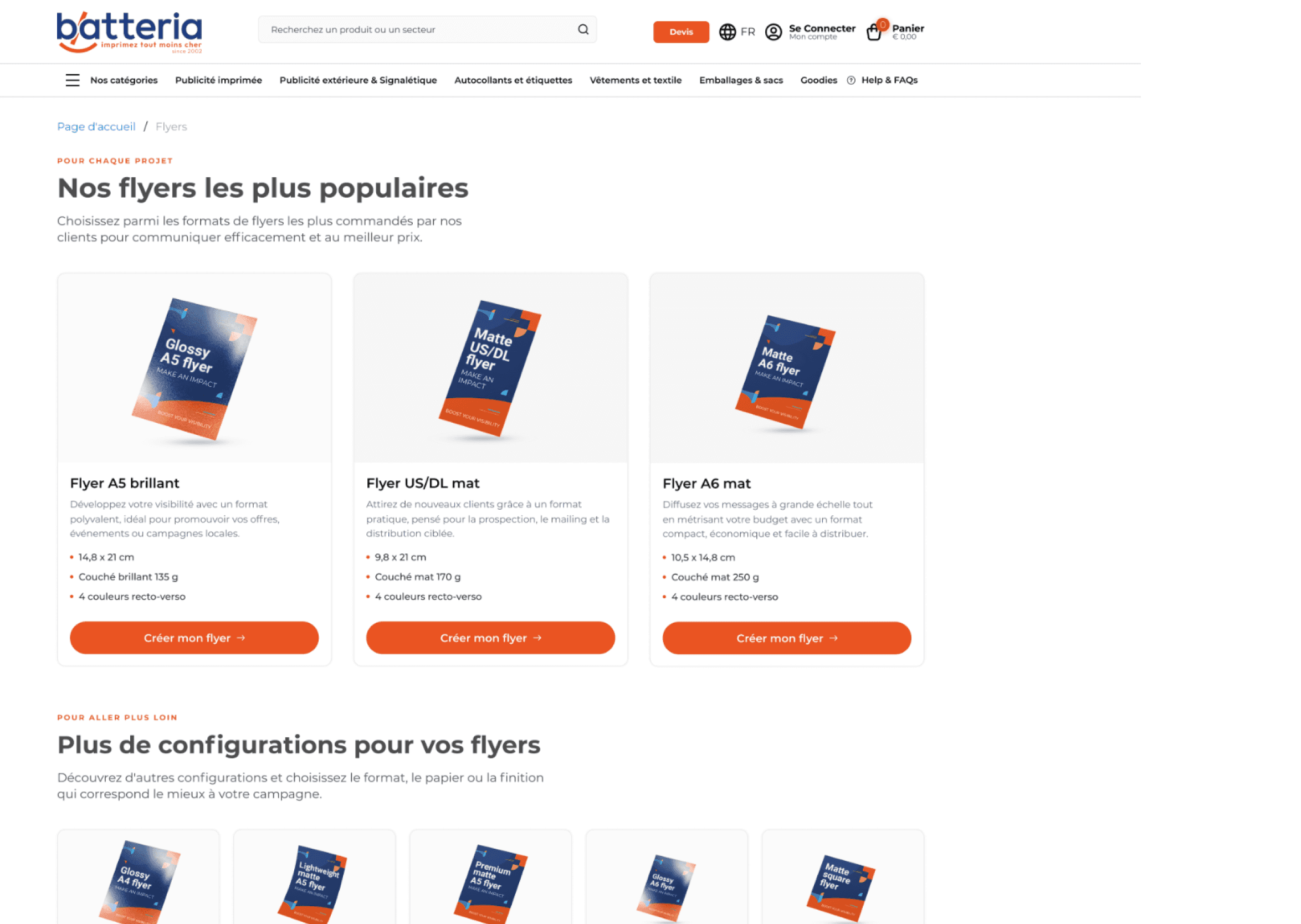
Mobile Experience
Product Configuration
Product Education
Customer Support
Conversion Optimisation
Mobile Navigation
Improving Mobile Navigation
The existing mobile navigation lacked structure and made it difficult for users to explore the catalogue.
We redesigned the navigation to improve accessibility, responsiveness and information hierarchy while keeping the overall experience familiar for returning customers.

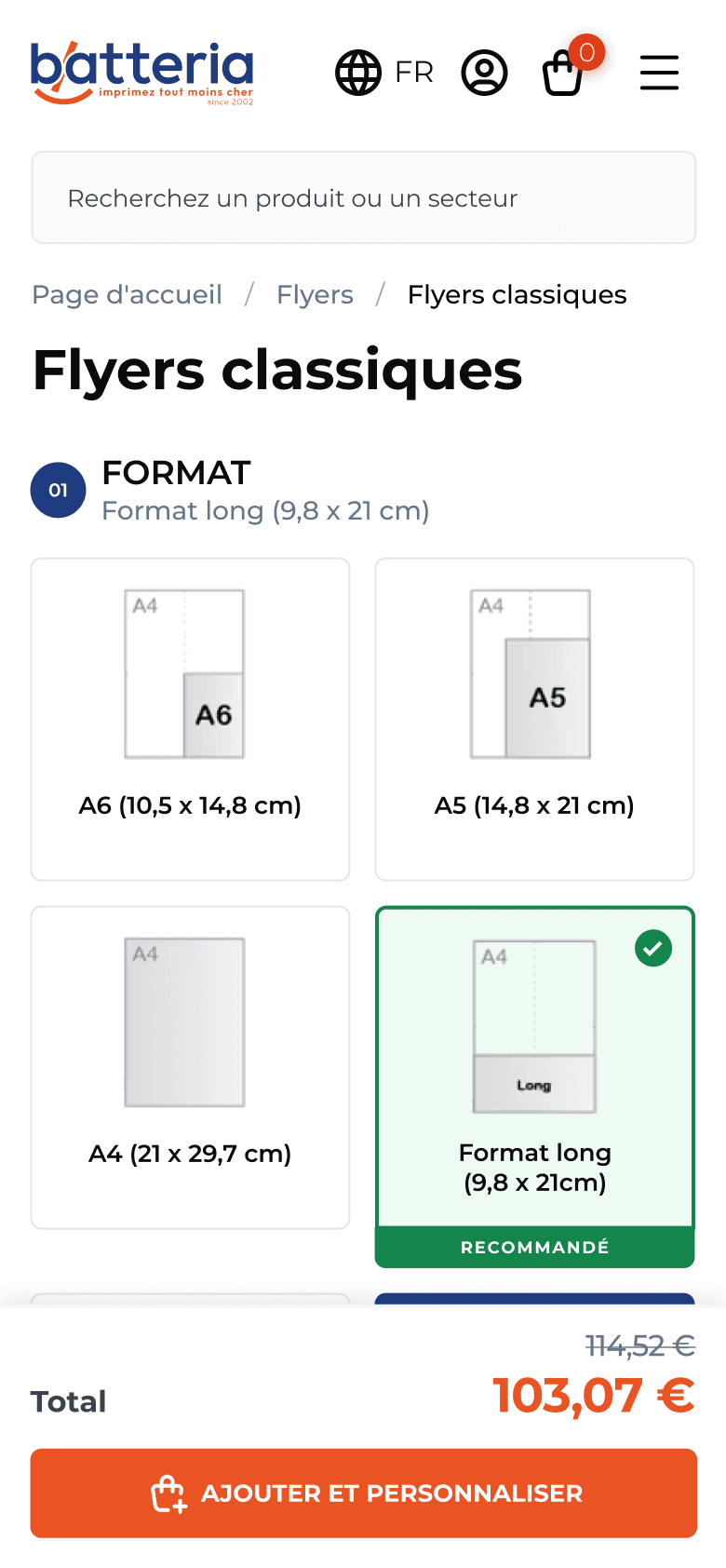
Product Configuration Page
Rebuilding the Product Configuration Experience
The product configuration page generated the highest abandonment across the purchasing journey. Our goal was to reduce uncertainty and make configuring products feel significantly easier.
Recommended Configurations
We introduced recommended configurations based on the most frequently ordered combinations, allowing customers to start with trusted presets instead of configuring everything from scratch.
Dynamic Pricing
Instead of displaying €0 until the final step, pricing now updates instantly as users modify product options.
A sticky pricing summary remains visible throughout the journey, giving users continuous feedback and greater confidence while configuring products.
Mobile-First Experience
The configuration flow was redesigned for mobile with better spacing, simplified interactions and persistent pricing, making purchasing significantly easier on smaller screens.

Product Pages
Final Product Page Design
Existing product pages contained long blocks of text that explained products but rarely helped customers make decisions.
We designed a reusable template focused on guiding users with:
Best-selling configurations
Recommended options
Product comparisons
Educational content
Stronger calls to action
The new layout helps customers choose the right product before beginning the configuration process.

AI Integration
AI-Powered Customer Support
To improve customer support, we introduced an AI-powered chatbot and voice assistant trained on company knowledge.
Customers can:
Ask printing-related questions
Receive configuration guidance
Track existing orders
Transfer to a human agent whenever needed
Although these tools weren't designed to increase sales directly, they reduced customer effort and improved access to support.
Constraints
The project was delivered under significant business and technical constraints.
Active migration from legacy technology to Next.js
Tight development timelines
Multiple projects running simultaneously
Engineering limitations requiring design adaptation
High business pressure due to declining revenue
These constraints reinforced the importance of delivering measurable improvements incrementally instead of waiting for a complete redesign.
Measuring Success
Following the release, we monitored user behaviour and business performance.
Average session duration
+43%
Product configuration abandonment
−34%
Mobile conversions
+27%
Add-to-cart rate
+21%
Customer enquiries
+25%
Customer support also reported increased engagement, with many users relying on the AI assistant to better understand products and track their orders.
These improvements demonstrated that targeted UX decisions could create measurable business impact without requiring a complete redesign.
Key Learnings
This project reinforced several lessons that continue to shape my design approach:
Solve the business problem before redesigning the interface.
Data and customer feedback should drive product decisions.
Small, iterative improvements can create meaningful business impact.
Strong collaboration is essential when designing within technical and business constraints.

Designing an AI Workforce That Businesses Could Trust From Day One
How user research and Lean UX shaped an AI platform that hides technical complexity, builds trust, and helps businesses integrate AI into their daily operations with confidence.

Designing the Operational Backbone of a Global Enterprise
How I transformed fragmented budgeting workflows into a centralized platform that supports complex operational planning, permission-based collaboration, and real-time visibility across multiple levels of management.